Everyone keeps telling me AI is going to replace programmers. After using it daily on illumos work for a while now, I think it is something older and far less scary: the CNC machine of code. The craft does not vanish, it moves up a level.
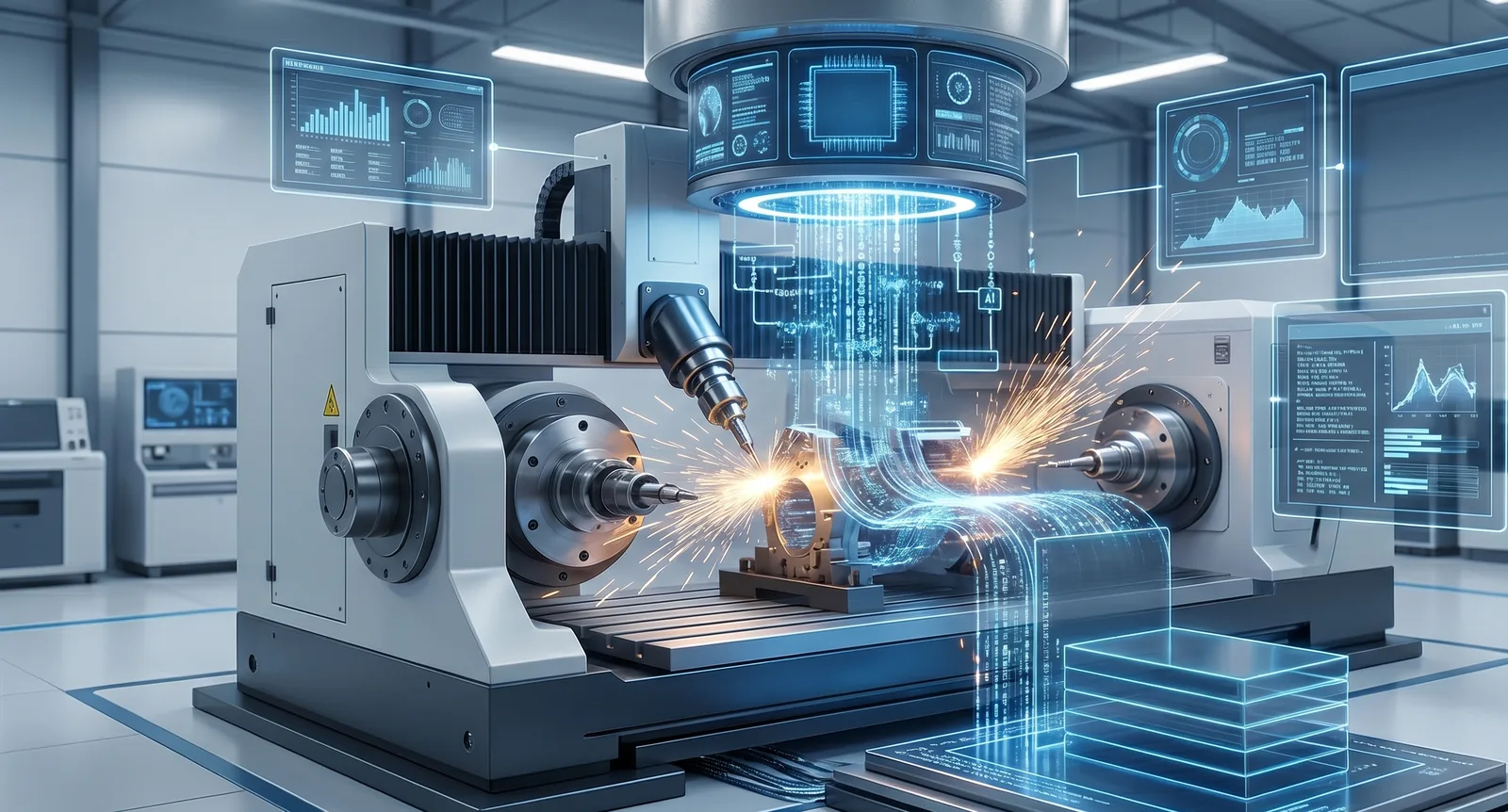
AI is the CNC Machine of Code
I have been using the AI coding tools daily for a while now. On stream, on the Installer, on package work, on the small Rust glue that nobody else wants to write. And the discourse around them drives me a little mad. Every week the timeline swings between "this is useless autocomplete" and "programmers are finished, pack it up." Neither of those matches what I actually see when I sit at the keyboard.
A hunch kept nagging me while I worked, and the longer I sat with it the better it fit. So I am going to write it down and see if it holds up: AI is the CNC machine of code. Not the robot that takes your job. The machine in the back of the Shop that changed what the job was.
What the CNC machine did to the shop
When numerically controlled machine tools showed up, and later the CAM software that could generate the toolpaths for you, the prediction was made with a lot of confidence: this is the end of the Machinist. Why keep paying someone with twenty years of feel in their hands when a Program can cut the part?
That is not what happened. The trade changed instead. Manually punching code for machines that could suddenly work four and five axes became too slow, so the work moved up a layer. The Machinist told the CAM software what they wanted and the software emitted the G-code. The handwheels went away. The judgment did not. The people who understood metal kept understanding metal, they just stopped turning cranks to express it.
A CNC machine cuts perfect scrap
Here is the thing about a CNC machine that I think people forget. It does not decide what to make. It takes a precise Program and executes it faithfully, fast, and repeatably. That last word is the whole point. You can run the same program a thousand times and get a thousand identical parts. For a small Shop that is an enormous amount of leverage.
But the machine is completely indifferent to whether the Program is any good. Hand it a bad one and it will happily cut you a flawless piece of scrap. On time. To spec. Every single time. It amplifies whoever is driving it. A master gets leverage out of it and a beginner gets to make expensive mistakes much faster than they ever could by hand.
So the skill did not disappear when the cutting got automated. It moved:
- Off the handwheels and onto the Program — describing the intent precisely.
- Into fixturing — how you hold the stock so the cut comes out true.
- Into feeds and speeds — the tacit knowledge that separates a clean surface from a ruined one.
- Into inspection — because a part is not finished until someone has measured it against what it was supposed to be.
Now read that back, for code
The mapping is almost embarrassingly direct, and that is why I cannot let the hunch go.
AI is the spindle. The prompt, the spec, the issue you are working from is the Program. Your existing codebase is the raw stock. Your tests, your types and your CI are the fixturing and the jigs. And review, actually reading the diff, is the metrology bench at the end of the line.
The machine executes your intent faithfully, fast, and at a scale you would not attempt by hand. It is also gloriously indifferent to whether your intent was any good. Garbage in, perfect garbage out, and it arrives a lot faster than the garbage you would have typed yourself. A function the model wrote is not done because it compiles, any more than a bracket is done because the spindle stopped moving. It is done when someone who knows what the part is for has held it up against the spec. On a project like illumos that someone is still very much us.
The skill moves up a level
This is the part the "it will replace us" story keeps missing. CNC did not delete the Machinist's knowledge, it relocated it. The machine took the rote cutting and the human kept, and actually deepened, the part that was always hard: holding the work, choosing the strategy, judging the result.
I think the same relocation is happening to us. The boilerplate, the third near-identical handler, the test fixtures, the obvious mechanical refactor, that is rote cutting and I am glad to hand it off. What stays human is the work that was always the real job. Deciding what to build. Fixturing it so it can be verified. Inspecting what comes out. The people in machining tell the same story from the other side, by the way, the time saved on programming gets reinvested in fixturing and quality validation, not in sending the Machinist home.
The plot twist nobody predicted in 1985
Here is what actually became of the Machinist forty years after the machine that was going to replace them. There are not enough of them. Over half of manufacturers say they cannot hire qualified CNC people, and the median age of the ones they do have sits around 55. The automation did not empty the trade. It raised the floor, multiplied the output of the people who stayed, and made the masters scarcer and more valuable than before.
I think the same thing is coming for our corner of software, and it is more or less the opposite of the doom forecast. The people who deeply understand the material, how a system actually fails, why a build is reproducible, what a correct fix really looks like, do not get cheaper when the cutting is automated. They get force-multiplied. The bottleneck stops being how fast you can type and becomes how well you can judge. And judgment is the one thing the machine cannot hand you.
What this means for a project like illumos
We are a Shop with far more work than hands. OpenIndiana and the wider illumos community are a group of volunteers holding up a serious operating system, and there is always another package to update, another driver to chase, another bit of bitrot to file off. A CNC machine in the back of that Shop is a genuine gift.
But only if we keep the Machinist. The leverage is real and so is the failure mode. A tool that lets a small team produce a lot, very fast, will just as happily produce a lot of plausible scrap, and plausible scrap is worse than obvious scrap because it gets through review. Our defense is the thing we already care about. Knowing what a correct package looks like. Building reproducibly. Measuring every part against the spec before it ships. I would argue review matters more in this world, not less, not less.
I do not know exactly where the lines settle. I do not know how much of the audit problem we already have with hundred-dependency Rust crates gets worse when a machine is writing more of the code, and I do not know which parts of the craft turn out to be load-bearing until we try to automate them and watch something break. That is fine. We figured out the cargo-versus-system-packaging tension by arguing it out in the open, and we will figure this one out the same way.
An invite
If any of this resonates, I would love to compare notes. Come try the spindle on something low-stakes. The illumos userland is full of small tools that are perfect for it, and I could genuinely use the hands on the Installer and the package Forge. Or just go poke around the illumos repos and see what a real Shop looks like.
So that is the hunch, written down. AI is the CNC machine of code. Learn to drive it, fixture your work so the output can be inspected, and never confuse a fast cut with a good part. The spindle does not know what it is making. We still have to.
Hope to talk to some folks on Socials and email.
-- Toasty